
Maximise your fitness journey with cycle-synced workouts! Learn how to harness your menstrual cycle’s power for peak performance in each phase. Discover exercises tailored to your body’s rhythm and achieve your fitness goals.
Ever had days when your workout feels effortless, and others where it’s a struggle? Your body’s natural rhythm might be the key. Your change in mood and energy from one day to the next is probably your hormones. While fluctuations in hormones have probably interrupted your workout in the past, understanding your body’s natural rhythm can actually support and improve peak athletic performance too. You can harness your hormones at every phase of your menstrual cycle to unlock your body’s innate potential for strength and vitality and achieve more of your fitness goals.
In this guide to exercising in alignment with your menstrual cycle, you’ll discover:
- The four stages of your menstrual cycle and the workouts that align with each best
- Best workouts for your menstrual phase
- Best workouts for your luteal phase
- Best workouts and types of exercise for every stage of your cycle
For people who menstruate, our hormones are the culprits behind how we think, feel and sometimes act, and it changes throughout the menstrual month (the 28-day-ish cycle between one bleed and the next). Menstruation isn’t just about the week you’re bleeding; it’s what goes on in between too.
Our bodies aren’t going to react exactly the same way to training each day, week or month, but we can get ahead of how we might feel through cycle tracking so we can get the most out of every workout. Just like nature, our bodies work in cycles. You might have heard of the 24-hour circadian rhythm, but a lesser-known and equally important one is the 28-day (ish) infradian rhythm that only people who menstruate experience.
Fluctuating hormones can affect energy, mood, resilience, confidence, sleep and much more, which can all affect how we exercise, hence why being aware of them at each stage of your cycle can boost your exercise performance, recovery and results. Discover the best workouts for each of the menstrual cycle phases to ensure you’re working out smarter, not harder.
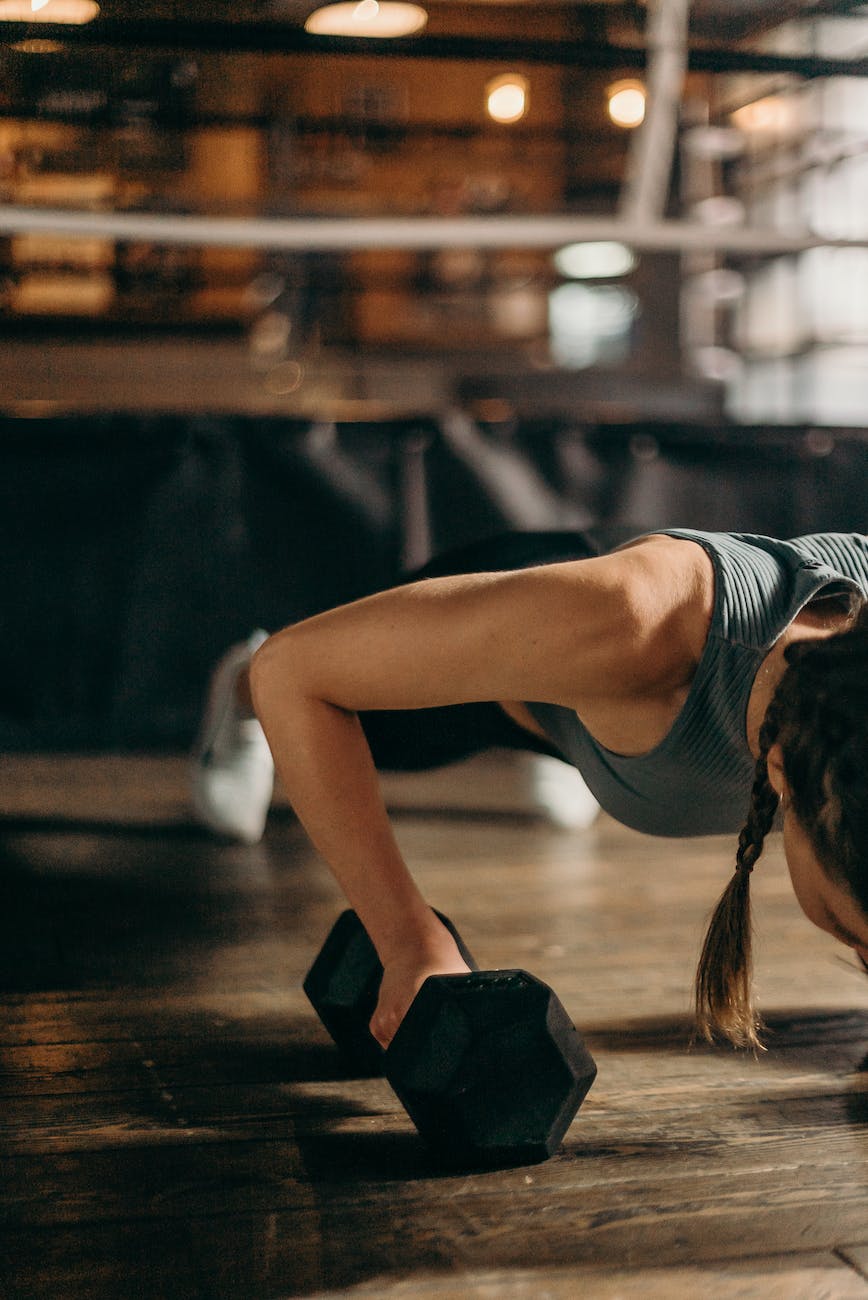
Understanding Your Menstrual Phase for Smarter Workouts
With cycle syncing, we can learn when to lift heavier, when to take a rest day and everything in between. Just by getting to know our bodies, we can achieve more, whatever our goals, from accelerating weight loss to getting more toned, building our glutes, or boosting our fitness. Only you know your menstrual cycle and body, but this workout guide for your menstrual cycle could support you as a starting point as you learn more about your unique rhythm.
Cycle syncing can help you to get to know your body and make it work best for your exercise goals. Your cycle is split into four phases – your menstrual (or bleed) phase, your follicular phase, your ovulatory phase and your luteal phase, but sometimes its easier to think of it as two halves – your follicular phase (days 1-14) and your luteal phase (days 15-28). Each has different symptoms that can impact how we exercise.
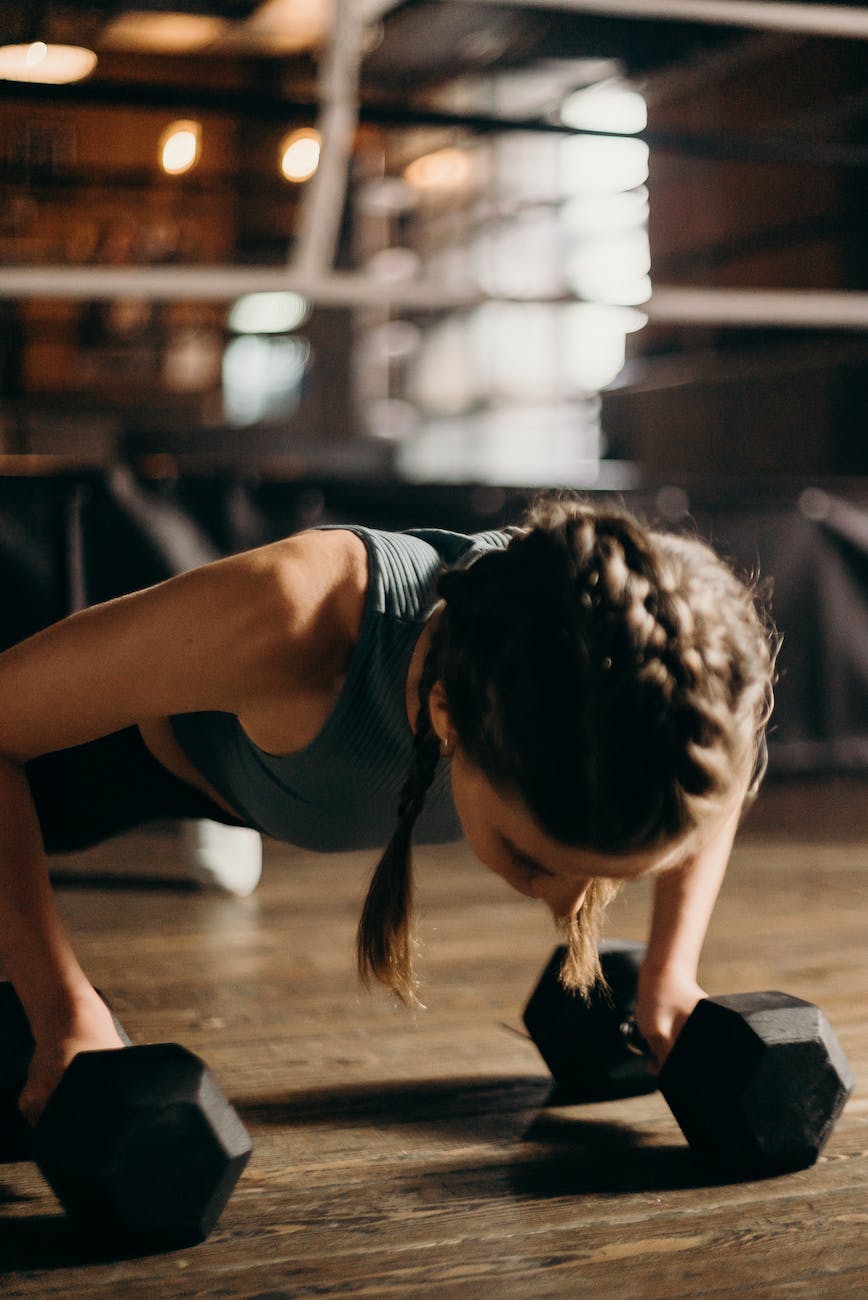
How To Exercise During Your Menstrual (Bleed) Phase (Days 1-7)
You may be wondering, ‘Can I work out during my period?’ There are no medical reasons to avoid it. Some like to work out during their bleed, others don’t. It’s completely safe to do so and light workouts can help to ease cramps and mood swings. Specific yoga poses can even help to reduce painful cramps. Try child’s pose, downward facing dog, head-to-knee pose, cat-cow, camel pose, seated straddle and legs up the wall pose.
The bleed phase typically lasts 3-7 days. Hormones during your menstruation (bleeding) phase start at their lowest, causing low energy and fatigue. However, as the days progress, hormone levels rise, bringing more energy and resilience to the follicular phase.
While you may feel emotional relief when your bleed arrives after the luteal phase, some women experience physical pain like cramps and sore or aching muscles during menstruation. Opt for low-intensity cardio, swimming, or cycling during your period. Strength training is possible but the low-intensity workouts may be more manageable (if you’re training with weights, consider reducing your reps or sets or dropping your percentages by 10%). On the other hand, you could choose to go at a slower pace or swap out the barbells and dumbbells for Pilates instead.
If you prefer even gentler movement, walking and yin yoga can help to relax you. Concerned about leaking through your leggings? Try home workouts while you’re on your period to ease discomfort or save your dark gym wear sets and oversized t-shirts for your heavy bleed days.
Embrace rest and gentle movement during this phase, but listen to your body and if you get a burst of energy, go for it. Strength training three times a week is proven to have incredible positive outcomes on your health, and we shouldn’t put off exercising during our period if we get the urge to move. A healthy body is one that exercises regularly with a mixture of strength training and cardio. You just may want to complete your higher-intensity sessions towards the tail end of your bleed.
How To Exercise During Your Follicular Phase (Days 6-14)
Hormones are rising and you’re probably feeling a surge in energy towards the end of your period. This is the time to go hard with your fitness goals. The boost of oestrogen and testosterone means that your body is primed for dynamic high-intensity sessions like HIIT classes, CrossFit, boxing, strength training and circuit training, plus you’ll recover faster between sessions, which means maximum gains are up for the taking. Bonus!
It’s also a great time to try new things and workout in groups as our hormones make us super sociable so sign up for that workout class with friends. Physical performance, stamina and strength may seem to increase as your body is more resilient to push through difficult times. High-Intensity Interval Training (HIIT) is perfect for when your energy levels are high. It can also help you to increase your Vo2 max, which means increasing the amount of oxygen your body can utilise during exercise. The better you get, the fitter you become, and the healthier your heart – great for lifelong health and vitality.
(Just so you know, your ovulatory phase is often described as part of your follicular phase, as is your bleed. Cycle tracking can help you to understand your body best.)
How To Exercise During Your Ovulatory Phase (Day 14)
Ovulation happens around day 14 of your cycle (within your follicular phase), and in the 6 days leading up to it, you might feel energetic, positive and happy. Consider ovulation your peak performance phase. This is the time to go for personal bests, push your body to its limits, and try new challenges because you’re better equipped to handle them. You might experience a boost in confidence, motivation and drive (aren’t hormones just magical?). Here, you should continue with the high-intensity workouts you were doing during the first half of your follicular phase. You could try Tabata, circuit training and running too. Marathon training? Head out for your long run during ovulation; it’ll be easier to push through.
During this phase, it’s easier to build and maintain muscles so focus on muscle-building exercises like heavy strength training. Your body can also access stored carbohydrates (glycogen) for sustained performance more easily, so opt for longer, endurance-focused workouts like long-distance running, cycling or hiking, or Hyrox-inspired sessions where you’re going all out for 50 minutes or more. If sprinting is more your jam, increased energy levels during this time could give you the boost to achieve record stats.
It’s time to bring your main-character energy to the forefront and soak up the feel-good vibes of ovulation. Put on your favourite gym outfit, press play on your banging workout playlist and go smash that workout. Lift heavier, run further, and take advantage of that energy and resilience surge. Take advantage and bank those gains with workouts that challenge you!
How To Exercise During Your Luteal Phase (Days 15-28)
You may feel a slight dip in motivation and energy right after ovulation when you enter the luteal phase of your cycle because of the rise in progesterone and dip in oestrogen. Progesterone is the hormone that makes you want to sleep and rest more. It can also increase your body temperature and impact sleep, which can affect how you feel during exercise.
You’ll still be able to do all the activities you did in the first half of your cycle, but it might feel harder to push further, lift heavier, and get that last rep in. It doesn’t mean we shouldn’t try but we should cut ourselves some slack if it feels like a slog. (Our inner critic can be loud during this phase!) Take more rest days if you need to. Exercise triggers the release of feel-good endorphins, which can elevate your mood and help offset those annoying PMS symptoms; you know the mood swings, anxiety, and unexplained emotional outbursts.
Over the years, there’s been a misconception that women should just do yoga and walk during their luteal phase, and while that works for some, it may not for others. Actually getting at least 150 minutes of moderate exercise per week will keep us the healthiest, physically and mentally, but if you need to drop the intensity by a fraction because you’re not hitting your usual reps or sets, don’t beat yourself up about it.
Alternatively, schedule low-impact sessions during this time. We can absolutely do strength training, boot camp, circuits, run, cycle, swim, HIIT classes and more during our luteal phase; it just might be not your best workout ever. This is a great time for maintenance strength training sessions. Show up, do the work, and tick it off. It all counts.
Track Your Cycle To Enhance Your Workouts & Performance
If you’re someone who struggles to take rest days or finds slower, gentler movements boring or dull, it’s worth remembering that our bodies, like nature, are cyclical. We can’t be blooming all year-, or month-round. Our body needs some downtime too, and that slower session could be what your body needs to restore.
Tracking your cycle helps you to become familiar with your body’s natural rhythms and how it influences your energy levels, physical performance and mood. This in turn can support you to make more informed decisions about which workouts to do on different days of your cycle to help you get the most out of your workouts whatever your fitness goals.
Exercise With Your Menstrual Cycle: Do What’s Right For You
While there’s evidence to suggest how hormone fluctuations can affect your physical performance, it’s not a one-size-fits-all approach. Everyone’s menstrual cycles and bodies are different, as are the ways you prefer to train. Listen to your body first, analyse the findings, and choose the workout that’s right for you.
Building healthy habits is the key to a happy, healthy body and life. Any kind of exercise, even just a walk or stretch session is beneficial for your health in the long run.
Wondering how I exercise in line with my menstrual phase? I share my workouts and thoughts on cycle syncing over on TikTok and Instagram too. Join me!
*Just a heads up that the info shared here is for general purposes, not as medical advice, and might not always be super accurate or reliable. (I do research and what I share is the best information I gave found at the time.) Feel free to read along, but remember, any actions you take based on this info are on you. We’re not responsible for any damage or losses. Also, those links? Not our official endorsements. And yeah, things might change without much notice. Enjoy your read!*
 She Flows
Leave a comment